Dealing with an electrical cabinet, canopy, or ute toolbox that fails to stay sealed? Chances are, the issue isn’t locking strength, but the type of latch mechanism being used. Compression latches and locks solve this by drawing the panel tight against a rubber gasket, creating a weatherproof, dust-tight seal rather than simply holding it closed.
What Are Compression Latches and Locks?
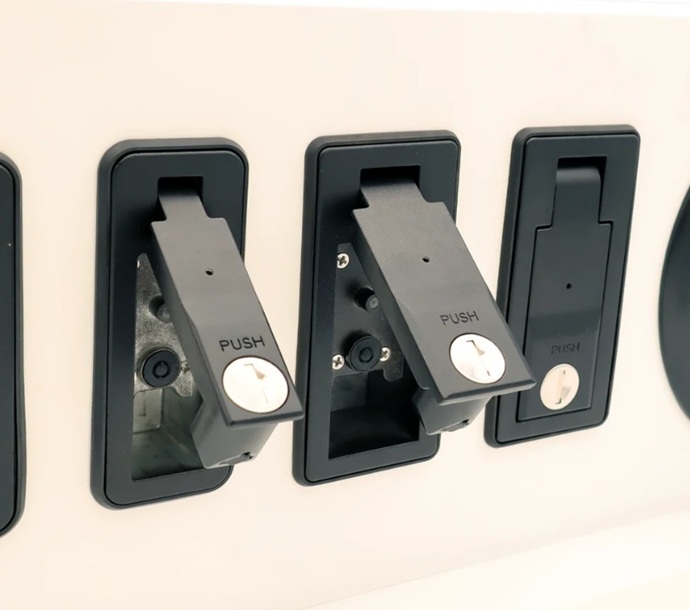
While a standard latch holds a door or panel closed, a compression latch goes a step further by drawing the panel tightly against the frame as the mechanism is turned. This compresses a rubber gasket between the panel and frame, helping create a secure seal against dust, moisture and other environmental factors.
The principle is similar to the seal created when a container lid is pressed firmly into place. The compression between the panel and gasket helps prevent water and dust from entering while reducing movement and rattling. This makes compression latches useful for applications such as electrical enclosures, outdoor switchboards, air conditioning units, machinery and toolboxes.
Fixed or Adjustable: What’s the Difference?
Fixed ones come already set to the right tightness. You simply screw them on and get the same amount of compression each time. Some are also sold as reliable compression locks, giving you that same steady squeeze with the added security of a key or code.
Adjustable compression latches, on the other hand, let you wind them tighter or looser using a screw or nut. They can be handy because rubber gaskets can flatten out over time. You can adjust the latch to make up for the change and maintain a tight seal.
The Parts You’re Working With
A compression lock consists of three basic parts: the actuator, such as a handle, key or push-button; the cam that catches onto the frame; and the rubber gasket that creates the seal when compressed.
How Do They Work?
When you turn the handle, the cam inside the latch starts to rotate. This movement draws the panel tightly against the frame, bringing the two surfaces together with the gasket between them.
As the cam turns, it increases the pressure between the panel and frame, compressing the gasket and creating a tighter seal. The result is more than simply keeping the panel closed. The compression helps prevent dust and water from getting through while also reducing movement and rattling.
That pressure can be particularly useful on equipment that is exposed to regular vibration or movement. By holding the panel firmly against the frame, the latch helps stop it from wobbling or coming loose during use. The amount of compression will depend on the latch and gasket being used, as well as the application.
When you want to open the panel, turning the handle in the opposite direction releases the cam and reduces the compression. This allows the panel to open without putting unnecessary pressure on the gasket, which can then return to its normal position ready for the next closure.
Benefits Beyond Basic Security
Compression locks do more than keep something securely closed. They can also offer a few other benefits, including:
- Great sealing. The latch squeezes the panel tight against the gasket, keeping out dust and water. That’s the main reason why they’re often targeted for outdoor and industrial use.
- Less shaking and noise. With the gasket pressed firmly in place, there’s less rattling. You can use them on machines, vehicles, or basically anything else that vibrates a lot.
- Durable construction. Depending on the materials and design, compression latches can provide reliable performance in demanding environments, including those exposed to vibration and weather.
- Adjustable fit. Some models allow you to match the grip to different panel thicknesses, so one latch can work across a few different jobs.
- Added security. Lockable compression latches can help prevent unauthorised access to enclosed equipment and components.
Uses and Applications
Compression locks aren’t limited to factory settings. They’re used in a range of applications:
- Vehicles and storage: Adjustable models can be used on vehicle storage compartments and other enclosures, helping keep out dust and water while holding the panel securely despite bumps and vibration.
- Marine gear and toolboxes: Fixed types made of durable, corrosion-resistant materials are known to hold up against rust and weather well, which makes them great for boats, ute canopies and outdoor toolboxes.
- Electrical cabinets: These keep sensitive equipment safe from moisture and dust.
- Aerospace and medical panels: Here it’s less about weather and more about precision, keeping seals steady where reliability really counts.
- DIY builds: They’re also handy for home projects like a custom outdoor cabinet, giving you a proper professional-grade seal without too much effort.
Wherever something needs to stay sealed and steady, there’s a good chance a compression latch can help. From vehicle storage compartments and outdoor toolboxes to electrical cabinets and machinery, these latches provide a practical way to hold panels firmly in place while helping protect what’s inside.