Activewear and synthetic fabrics go hand in hand. At least, that’s what we’ve been told. Synthetics like polyester and nylon have long been marketed as the practical choice for yoga wear, thanks to their durability, wrinkle resistance, stretch and quick-drying properties.
However, when you think about it, it’s a bit ironic that the healthy, mindful lifestyle associated with yoga is also linked with synthetic clothing, which is often made using harmful substances. That said, natural materials are worth considering when it comes to yoga wear. Merino pants, for instance, let you move away from the usual polyester and nylon without giving up the qualities you want in activewear.
Although most people wouldn’t immediately think of merino wool as an option for a yoga outfit, this soft, supportive, and breathable fabric has increased in popularity as many realise the benefits of owning a pair of merino pants for womens comfort.
Why Choose Merino Wool for Activewear?
Natural Softness
One of the first things you want from yoga pants is softness. You’re stretching, folding, sitting and moving through poses where your clothing stays in close contact with your skin. Merino wool is particularly well suited to this. Unlike coarser traditional wool, merino fibres are finer and softer. You don’t get the coarse or scratchy sensation often associated with traditional wool.
While synthetic fabrics such as polyester and nylon can also feel smooth against the skin, merino has a naturally soft feel without relying on that slick, artificial texture. When doing slower practices, where you’re holding poses for longer or spending more time seated or lying on the mat, you’ll appreciate the softness of merino garments.
Flexible Support
Yoga isn’t necessarily about pushing beyond your limits. It’s more about listening to your body and respecting what it can do on the day. That doesn’t mean the practice is without movement. You’re still bending, stretching, and balancing. So, you need clothing that’s supportive and fits well. Merino fibres have natural elasticity, which helps fabric recover after being stretched.
Synthetic fabrics are often engineered specifically for stretch and hold their shape, which is one reason they’re often used in activewear. Merino takes a different approach. Instead of relying entirely on a highly technical synthetic fabric, it can provide natural stretch and movement, particularly when blended with another fibre such as elastane.
Breathability and Moisture Control
Yoga can leave you warmer than you expect, particularly during a faster flow or in a heated studio. This is where the way a fabric handles moisture becomes important. Polyester and nylon are often chosen for activewear because they can move moisture away from the skin and dry quickly.
Merino wool, on the other hand, absorbs moisture vapour and releases it into the surrounding air, helping manage moisture as your body warms up. Therefore, a pair of merino pants for womens yoga practice is comfortable to wear across changes in temperature.
All-Day Versatility
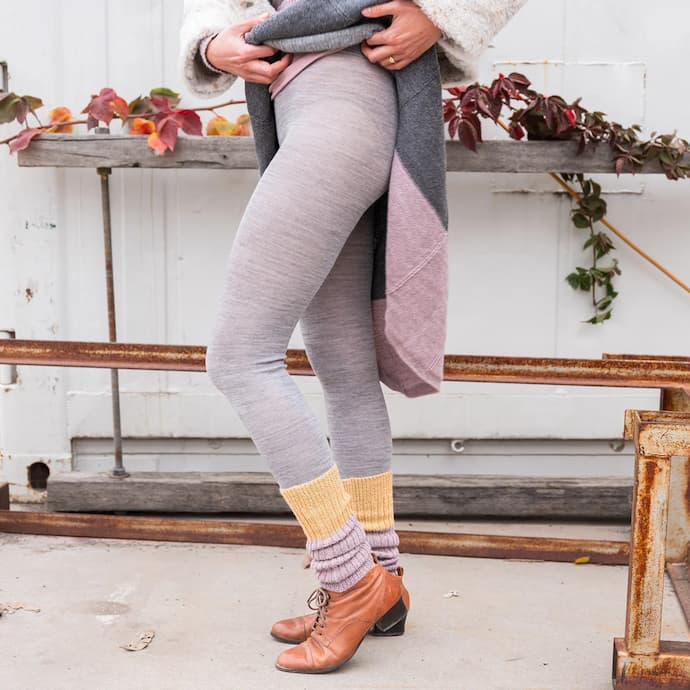
Another thing that makes merino wool leggings for women appealing is that they can be worn beyond the studio. Unlike activewear with a recognisable sporty look, shiny fabrics, bold colours, contrast panels and prominent logos, merino leggings often have a softer, more understated aesthetic.
Some merino yoga pants are even designed specifically to transition from a morning practice to coffee, errands or the rest of your day. That versatility can make a pair of merino wool pants feel less like clothing only reserved for exercise and more like something you can actually build an everyday outfit around.
Temperature Regulation
Temperature regulation is another quality worth mentioning. Yoga can take you from a warm, active sequence into a still pose where your body temperature starts to drop.
Merino wool has natural insulating properties, but it can also help manage excess heat and moisture as you warm up. Synthetic fabrics can also be engineered to perform across different conditions, but merino wool has this ability naturally. If you often practise in cooler studios or want one pair that works across different seasons, again, merino could work well.
Sustainable and Biodegradable
If environmental impact matters to your purchases, then merino clothing is the responsible choice. Merino wool is renewable, biodegradable, and breaks down in soil within months at end of life.
Polyester, on the other hand, is made from fossil fuels. It’s not biodegradable and sheds microplastic fibres into waterways with every wash. Even recycled polyester (rPET) still sheds microplastics and won’t biodegrade.
If you want to be certain that the merino yoga garment you’re buying meets recognised standards, look for independent certifications that tell you more about the fibre, the finished garment and where the wool comes from.
For instance, the Woolmark certification confirms that a product meets defined standards for wool fibre content and quality. OEKO-TEX Standard 100 Class I indicates that the finished garment has been tested for a range of potentially harmful substances, with Class I being the strictest category and intended for products that come into close contact with skin, including clothing for babies and young children. The Responsible Wool Standard (RWS) focuses on how the wool is sourced, including animal welfare and responsible land management practices.