Hunters, sport shooters and even golf enthusiasts understand the importance of being able to calculate accurate distances. And the more experienced a sportsman is, the more receptive they are to using advanced optical devices to measure distances, especially when approximating for windage, calculating straightline distances and avoiding misjudgements in depth perception.
In each of these cases though, the optical device used by sportsmen has to do more than simply magnify the target: it has to be able to provide exact point-to-point target information under a wide range of environmental conditions. This is the purpose of using enhanced rangefinding equipment.
Modern Range Finders Make Accurate Point-to-Point Targeting Simple
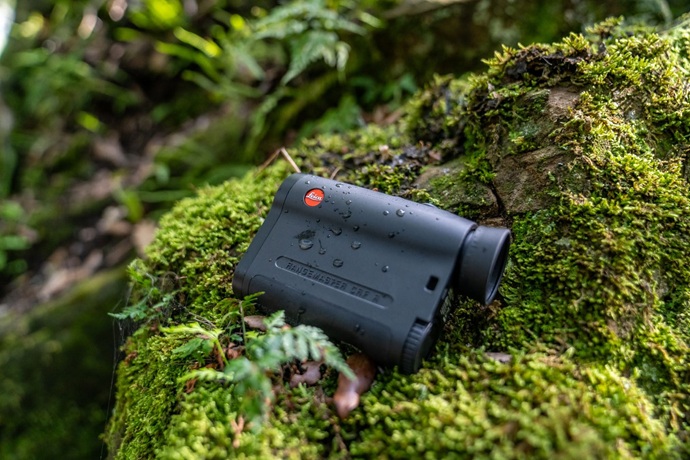
Let’s be honest: while there’s nothing unusual about hunters and other outdoorsmen packing scopes and binoculars with their field gear, the fact is, not every physically mounted or handheld optical device is designed to estimate absolute distances. This is where long-distance laser range finders can be trusted to reduce long distances to easily manageable measurements.
Unlike standard monoculars, binoculars and scopes, special rangefinding devices combine premium optical performance with the precision of infrared laser technology, giving them a decisive range perception advantage, no matter the distance, weather conditions or the amount of available lighting.
By measuring the time it takes for a beam of infrared light to be reflected off of a target and converting it into distance, laser-type rangefinding devices are the perfect instruments for the following:
- Establishing precise distances. With the most advanced devices capable of measuring distances up to 3700 metres, the time-of-flight measurements of modern range finders for sale make it possible for anyone who needs precise distances to satisfy their long range calculations.
- Calculating precise angles of compensation. The integrated sensors built into today’s optical range finders are designed to automatically compensate for variables such as temperature, air pressure and incline/decline angles, allowing for the most precise angles of compensation to the target.
- Determining target achievability. By using a high precision range finder, outdoorsmen can instantly and accurately assess whether their intended target is achievable, and if not, quickly determine whether they should close their distance to the target, change their angle of approach or abandon the target altogether.
Ideally, modern rangefinding optics are essential for removing the guesswork from point-to-point range estimation. For hunters, that means successfully bringing down game at long range with a single shot. And for activities like sport shooting and golfing where the number of shots needed are as important as actually hitting the target, high quality rangefinding optics are the key to keeping those numbers to an absolute minimum.
Understanding How the Principles of Light Affect Ranger Finder Performance
From compact, 6x magnification scopes and mini-monoculars that fit easily in hunter backpacks and pouches, to the 15x magnification of the latest generation of binoculars used for long-range shooting and professional land surveying and forestry, modern rangefinders rely on 2 fundamental optical principles: light divergence and light reflectance. Laser rangefinding’s ability to accurately determine range and movement are tied directly to how well light can be focused onto, and bounces off of a target. Understanding these principles is the key to choosing the right rangefinder for the intended activity.
- Light divergence. Beam divergence is a measure of how much light spreads out at the distance it’s traveling. The narrower and more concentrated a laser beam is when it touches the target, the more effective it is at localising a target without a loss of accuracy due to beam spread or divergence.
- Light reflectance. Light reflectance is a measure of how much of the laser’s light is reflected off the target and back to the rangefinding sensor. Flat-surfaced and lightly coloured targets offer significantly higher reflectance than dark and uneven-surfaced targets, making them the easiest and quickest to calculate range.
While target attributes like colour, texture and even shape can all affect a rangefinder’s efficiency, environmental factors can also impact a rangefinder’s readings. Anything that affects the movement of light, including dust, smoke and moisture will have a direct impact on the device’s accuracy. Fortunately, the majority of the rangefinders for sale in Australia are designed to resist the elements while still delivering the best optical performance.
Features That Let Range Finders Rise To the Environmental Challenge
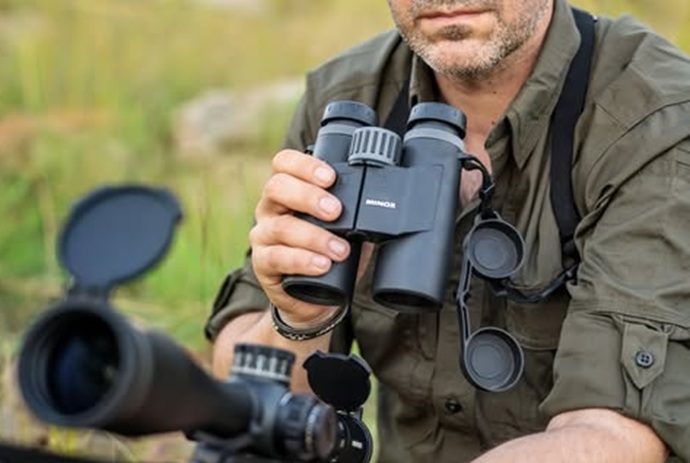
Make no mistake: when it comes to high quality range finders, Australia is a proving ground with few equals. From persistently arid and dusty winds in the central and western parts, to the humid northern and eastern regions, no other country has as many prospects for pushing range finder performance to the limit. That’s why when it’s time to buy range finders, build quality is just as crucial as reflection ranges and magnification rates.
Regardless of whether it’s a monocular, binocular or a scope, a top-of-the-line range finder for sale places light weight and compact size among its most desirable qualities. And when it comes to the kind of environment resistance that ensures accuracy, experienced outdoorsmen only buy range finder devices that offer the following features:
- Superior wet-weather protection. While standard IP54-rated protection against rain and water splashes is common, the best online range finder optics devices are built with waterproof and shockproof housings that are designed specifically to withstand dust and brief periods of submersion.
- Premium lens coatings. Anti-reflective and hydrophobic lens coatings are essential for reducing glare and increasing the level of ambient light moving through the lenses. They also encourage water and snow to sheet off of them, making lens cleaning easier under less-than-perfect outdoor conditions.
- Internal moisture resistance. Nitrogen pressurisation is a vital advantage for preventing the formation of condensation inside modern range finders. This moisture-resistance protection is effective at stopping lens fogging at any outdoor temperature ranging from -40°C – 80°C.
Invariably, it doesn’t matter if the task is hunting, target shooting or taking distance readings to gauge the volumes and source levels of bird calls, only the most durable range finders can be expected to withstanding the outdoors in the outback. That’s why Aussies prefer buying their range finder online from Australian shops; it’s the peace of mind that comes from knowing that they’re getting optics that are built to withstand Australia’s toughest conditions.
The Final Word
At the end of the day, for hunters, golfers, and other outdoor professionals and sportsmen, accuracy is more than an afterthought. It’s a matter of personal pride which, in the case of surveyors and foresters, can even have costly consequences if not achieved properly. The good news, however, is that it only takes committing to the right optical equipment to get the highest degree of point-to-point accuracy every time.
For serious outdoorsmen, long-distance laser range finders are the only way to go. They’re today’s benchmark for optimal optical performance, and an investment that’s well worth making.